Open Kitchen, Open Mind: NYC Sushi Restaurants That Turn Dinner Into a Masterclass
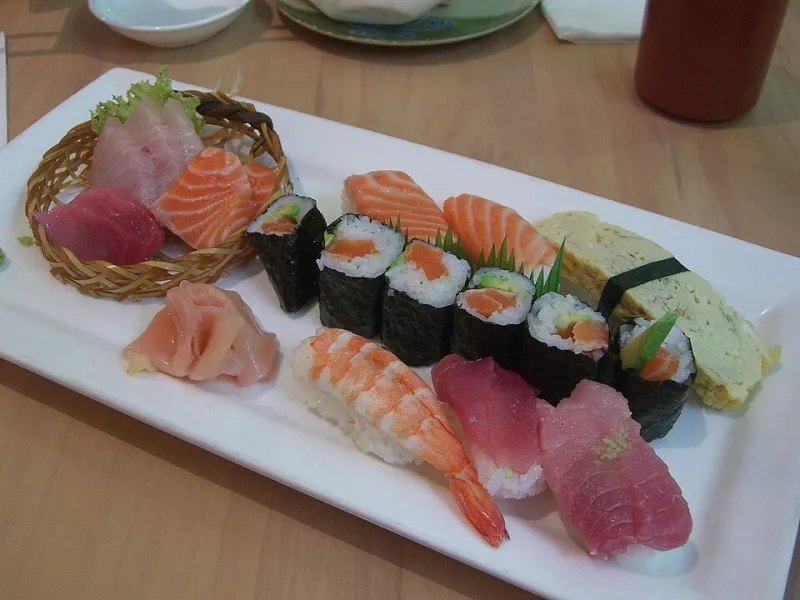
Photo: Alpha from Melbourne, Australia, CC BY-SA 2.0, via Wikimedia Commons
There is a particular kind of silence that falls at a sushi counter just before the itamae sets down the first piece of the evening. It is not the silence of anticipation alone—it is the silence of a room full of people who have, for a few hours, agreed to pay close attention. New York City has no shortage of exceptional sushi restaurants, but a select group of them have decided that close attention is not quite enough. They want their guests to understand.
This is a meaningful distinction. The difference between a fine meal and a genuine education often comes down to whether anyone at the counter bothers to explain the thinking behind what is being served. Increasingly, some of the city's most accomplished chefs are choosing to do exactly that—not as a performance, but as an extension of their own philosophy about what Japanese cuisine is and why it matters.
The Counter as Classroom
The omakase format has always contained an implicit pedagogical dimension. By surrendering menu control to the chef, the diner accepts a kind of guided tour through the kitchen's current obsessions. What varies dramatically from one restaurant to the next is how much narration accompanies that tour.
At establishments like Shoji at 69 Leonard Street in Tribeca, the counter experience is deliberately conversational. Chef-owner George Ruan has built a reputation not only for technically precise nigiri but for the kind of unhurried explanation that transforms a piece of aged hirame into a lesson in how low-temperature aging draws moisture from flatfish without compromising its delicate cellular structure. Guests who arrive curious and leave with vocabulary they did not have before are not an accident of the format—they are the intended outcome.
Similarly, Nakazawa, the long-celebrated West Village destination helmed by Daisuke Nakazawa, has maintained a culture of explanation that traces directly back to the chef's own years of apprenticeship under Jiro Ono. The stories Nakazawa shares about technique—why the rice temperature must approximate human body heat, how the pressure applied during nigiri construction varies by fish—are not incidental to the meal. They are part of what guests are purchasing when they reserve a seat.
Ingredient Tastings and the Demystification of Sourcing
Several New York establishments have taken the educational impulse a step further by incorporating ingredient tastings into the dining sequence itself. Rather than simply describing where a particular fish originated, these restaurants occasionally present the raw material before preparation, allowing guests to register the flavor of, say, wild-caught bluefin tuna from the waters off Oma, Japan, before it is seasoned and shaped.
This practice, while uncommon, reflects a growing awareness among high-end sushi chefs that American diners are increasingly sophisticated about provenance. The farm-to-table movement that reshaped the broader American restaurant industry over the past two decades has cultivated an audience that asks questions. Sushi restaurants catering to that audience have recognized an opportunity: the story of a fish—its origin, its season, the manner in which it was harvested and handled—is itself a form of flavor information.
Restaurants that have embraced this approach tend to work closely with specialty importers, and the best of them will name those importers at the counter. Knowing that a piece of uni arrived through a specific purveyor who sources exclusively from Hokkaido's Rishiri Island is not trivia. It contextualizes the taste experience in a way that deepens both appreciation and memory.
What to Ask—and When
For diners who wish to engage more fully with the educational dimension of a high-end sushi meal, timing matters considerably. The omakase counter is not a lecture hall, and an itamae in the middle of a precise preparation sequence is not available for extended dialogue. The moments between courses, however, often represent genuine openings.
A few practical observations for the curious diner:
- Ask about the rice first. Shari—the seasoned rice that forms the foundation of nigiri—is the element most often overlooked by guests and most willingly discussed by chefs who take pride in it. Questions about rice variety, vinegar type, and aging approach tend to unlock broader conversations about philosophy and technique.
- Inquire about the season's limitations, not just its highlights. Chefs appreciate guests who understand that certain fish are unavailable at certain times for reasons of quality rather than supply chain. Asking what the chef is not serving this month, and why, often yields more illuminating answers than asking about the night's featured ingredients.
- Reserve seats at the counter rather than tables. This point cannot be overstated. The educational experience described in this article is almost exclusively available at the counter, where proximity to the itamae makes conversation natural and the preparation process is fully visible.
Restaurants That Actively Cultivate the Curious Guest
Beyond Nakazawa and Shoji, a number of other New York establishments have developed reputations for welcoming engaged diners. Noz on the Upper East Side, where chef Nozomu Abe works with an almost monastic commitment to Edo-mae tradition, is known for the patience with which Abe explains the historical context of each technique. His counter seats a limited number of guests precisely because the experience he offers is labor-intensive in ways that extend well beyond the kitchen.
Sushi Noz is particularly instructive for diners interested in the relationship between Japanese culinary tradition and New York's specific ingredient ecosystem. Abe sources domestically where quality permits and imports where it does not, and he is candid about both decisions. That candor is itself educational—it models the kind of rigorous, unsentimental quality judgment that defines serious sushi practice.
For those newer to omakase dining who may feel uncertain about engaging with a chef of this caliber, it is worth noting that curiosity, expressed respectfully, is almost universally welcomed at these counters. The chefs who have built careers around the educational dimension of their craft did not do so by accident. They chose this format because they want to share what they know.
The Meal You Will Remember
New York offers countless opportunities for excellent sushi. The city's Japanese culinary community is among the most accomplished outside Japan, and the competition for discerning diners has driven standards to genuinely remarkable heights. But the meals that tend to remain most vivid in memory are rarely the ones where the fish was simply the finest available. They are the ones where something was understood that was not understood before.
The sushi restaurants described here have made a considered decision to offer that possibility. Whether a diner takes advantage of it depends entirely on the questions they are willing to ask.