Pour Decisions: How New York's Finest Sushi Counters Are Rewriting the Rules of Sake Service
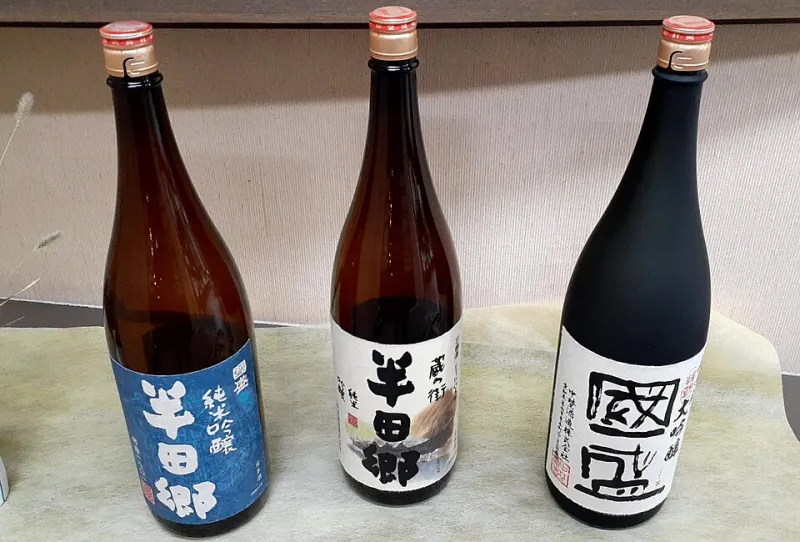
Photo: Asturio Cantabrio, CC BY-SA 4.0, via Wikimedia Commons
For decades, sake occupied a curious position in the American dining imagination—ordered reflexively, consumed warm in ceramic cups, and rarely granted the contemplative attention that a well-chosen Burgundy or aged Barolo might receive. In New York City, that narrative is changing with considerable momentum. Across the boroughs, sushi chefs and beverage professionals are engineering sake programs that challenge inherited assumptions, honor the drink's nuanced heritage, and meet the sophisticated curiosity of a dining public that has never been more eager to learn.
The shift is not merely aesthetic. It reflects a deeper reckoning with how Japanese culinary culture has been translated—and at times oversimplified—for Western audiences.
Rethinking the Default Order
Ask any seasoned sake professional in New York what frustrates them most, and the answer arrives quickly: the reflexive warm carafe. While heated sake has its place—particularly with certain junmai expressions whose earthy, umami-forward character benefits from gentle warmth—the assumption that all sake should be served hot has obscured an entire spectrum of drinking possibilities.
"Guests walk in expecting something hot and slightly sweet, and they're genuinely surprised when I pour them a chilled daiginjo that drinks almost like a Chablis," explains one beverage director at a prominent Midtown omakase counter, where the sake list now rivals the wine program in both length and intentionality. "The vocabulary shifts entirely. You start talking about melon, white peach, a whisper of koji. People lean in."
This educational impulse has become central to how New York's leading Japanese restaurants approach sake service. Rather than presenting a list and stepping back, sommeliers and chefs are increasingly building structured pairings into the omakase experience itself—placing specific pours alongside individual courses with the same deliberateness applied to a wine-paired tasting menu.
The Pairing Logic: Bridging Tradition and Innovation
Japanese culinary tradition offers its own pairing philosophy, rooted in the concept of mi wo kuwaseru—the idea that sake should not compete with food but rather elevate and complement it. This principle remains foundational, even as New York's most inventive practitioners push its boundaries.
At several downtown establishments, chefs are pairing nigiri courses with beverages that extend well beyond sake's traditional boundaries. A fatty toro course might be met with a sparkling nigori, whose gentle effervescence and residual sweetness cut through the richness in a manner reminiscent of how Champagne accompanies oysters. Leaner white fish—flounder, fluke, or a pristine hirame—might be paired with a highly polished junmai daiginjo, its delicate floral notes mirroring the fish's own subtle sweetness.
What makes New York's approach distinctive is its willingness to incorporate local craft beverages without abandoning Japanese authenticity. Some restaurants now offer optional pairings that include American craft spirits—a Hudson Valley eau de vie alongside a cured salmon course, or a locally brewed yuzu-inflected beer positioned beside a uni preparation. These choices are not arbitrary fusion exercises. When executed thoughtfully, they illuminate flavor relationships that transcend geography.
Debunking the Myths
The misconceptions surrounding sake are numerous, and New York's sake educators are working systematically to dismantle them.
Myth one: Sake is always sweet. In reality, sake spans a remarkable range of sweetness and dryness, measured in part by the nihonshu-do, or sake meter value. A highly negative value indicates sweetness; a positive value suggests dryness. Many premium expressions lean decisively dry, with crisp, clean finishes that pair beautifully with delicate seafood preparations.
Myth two: Expensive sake is always better. Premium rice-polishing ratios—the hallmark of ginjo and daiginjo classifications—produce elegant, aromatic sake, but a well-crafted junmai from a respected brewery can outperform a mediocre daiginjo at a fraction of the price. Several New York sake specialists take particular pleasure in recommending accessible bottles that consistently exceed expectations.
Myth three: Sake and sushi are always an ideal match. This one is perhaps the most counterintuitive. Some sake professionals argue that the vinegar in sushi rice can actually create tension with certain sake expressions, and that pairing sake with sashimi—where the rice variable is removed—often yields cleaner, more harmonious results. It is a nuance that repays attention.
The Classroom at the Counter
Perhaps the most meaningful development in New York's sake culture is the emergence of informal education at the dining counter itself. Itamae and beverage directors at the city's most respected establishments are devoting genuine time to explaining regional brewing traditions, the significance of rice variety and water source, and the distinctions between brewing classifications.
This conversational pedagogy mirrors the broader philosophy of the omakase experience—that dining at its finest is an act of trust and discovery, not merely consumption. Guests who arrive unfamiliar with sake's geography often depart with a working knowledge of Niigata's clean, crisp style versus Hiroshima's softer, more rounded expressions. They leave with brewery names committed to memory.
Several establishments also offer dedicated sake tastings outside of regular service hours, providing a structured environment for deeper exploration. These sessions, led by Sake Sommelier Association–certified professionals, cover everything from production fundamentals to food pairing principles—and they are filling up.
Sake's Place at the Table
The argument for sake's equivalence with wine in the fine dining context is, at its core, an argument about respect—respect for a brewing tradition spanning more than a millennium, respect for the craft of the producers, and respect for the diner's capacity to engage seriously with what is in their glass.
New York's sushi community is making that argument convincingly, one carefully selected pour at a time. For those who have yet to encounter sake in this context, the invitation stands. The counter is set. The carafe is chilled. And the conversation, it turns out, is just beginning.