From Counter to Kitchen: Building Authentic Japanese Culinary Skills in New York City
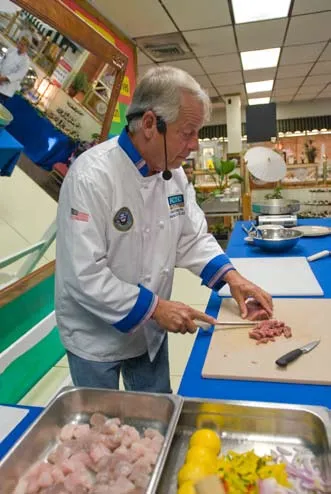
Photo: Japanese knife skills cooking class with sushi rice preparation NYC kitchen, via www.goodfreephotos.com
There is a moment familiar to anyone who has sat at a serious sushi counter: the itamae draws a single, unhurried stroke through a piece of tuna, and what emerges is something that looks entirely unlike the approximations attempted at home. The knife, the angle, the grain of the fish—everything cooperates in a way that feels almost effortless. It is not effortless, of course. It is the product of years of disciplined practice. But the good news, for those of us on the other side of the hinoki wood, is that foundational Japanese culinary skills are learnable—and New York City is one of the finest places in the world to learn them.
The city's Japanese culinary ecosystem is dense with opportunity: cooking schools with dedicated Japanese curriculum, knife artisans offering hands-on sharpening workshops, and specialty ingredient suppliers whose staff can educate as fluently as they can stock a shelf. What follows is a considered guide for home cooks ready to deepen their practice.
Start With the Knife
No single investment yields more immediate returns in Japanese cooking than a quality knife and the knowledge to maintain it. Japanese kitchen knives—particularly the gyuto (chef's knife), yanagiba (for slicing fish), and deba (for breaking down whole fish)—operate on principles of geometry and metallurgy distinct from their Western counterparts. Their harder steel holds a finer edge but demands more attentive care.
In Manhattan, Korin Japanese Trading has served professional chefs and serious home cooks for decades from its Tribeca location. The staff is genuinely knowledgeable, and the selection spans entry-level stainless options to hand-forged carbon steel knives that represent a lifetime investment. Crucially, Korin also offers knife sharpening services and periodic workshops on whetstone technique—a skill that, once acquired, transforms the relationship between cook and blade.
For those who prefer a more intimate learning environment, several Japanese knife specialists in the city offer private sharpening lessons. Learning to maintain an edge on a whetstone requires patience and repetition, but it is arguably the single most transferable skill a home cook can acquire. A sharp knife does not merely perform better—it fundamentally changes how one approaches mise en place, fish fabrication, and vegetable preparation.
Finding the Right Class
New York's culinary education landscape is rich, but Japanese-specific instruction requires some navigation. A few institutions stand out for the quality and authenticity of their programming.
The Institute of Culinary Education (ICE), located in Lower Manhattan, offers recreational Japanese cooking classes that range from single-session introductions to multi-week sequences. Their sushi fundamentals courses cover rice preparation, fish selection, and basic nigiri and maki technique—providing a solid structural foundation before students attempt more ambitious preparations at home.
Uchi NYC and various pop-up workshop series hosted through platforms like Airbnb Experiences have brought working sushi chefs directly into teaching roles, often in intimate settings of six to twelve students. These sessions tend to prioritize technique over volume, with instructors pausing to explain the reasoning behind each step—why the rice is seasoned at a particular temperature, why the fish is sliced against the grain, why resting matters.
For those drawn specifically to the art of sashimi presentation and fish fabrication, workshops hosted through Japanese cultural organizations—including programming occasionally offered through the Japan Society in Midtown—provide cultural context alongside technical instruction, situating kitchen skills within the broader aesthetic traditions of Japanese cuisine.
Sourcing Ingredients Like a Professional
Skill without quality ingredients produces limited results. Fortunately, New York City's Japanese ingredient supply chain is exceptional by any standard.
Sunrise Mart, with locations in the East Village and Midtown, stocks an impressive range of Japanese pantry essentials: short-grain sushi rice from reputable Japanese and California producers, a selection of rice vinegars, premium soy sauces, mirin, and sake suitable for both drinking and cooking. The staff can generally advise on brand distinctions and appropriate applications.
Katagiri, on the Upper East Side, is one of the oldest Japanese grocery stores in the country and carries specialty items less commonly found elsewhere—including a rotating selection of Japanese pickles, artisanal nori, and specialty tofu products that reward exploration.
For fish, the standard remains the wholesale and retail operations accessible through the city's remaining fish market infrastructure. Several Japanese restaurants source from suppliers who also sell retail to serious home cooks; asking directly at a trusted restaurant counter about their sourcing is a reasonable approach and often yields useful leads. For sashimi-grade fish specifically, purchasing from a Japanese fishmonger—rather than a general seafood counter—is strongly advisable.
The Skills Worth Mastering First
For beginners, the temptation is to attempt the most visually dramatic preparations before the foundational skills are in place. Resist it. The following sequence reflects the logic of professional training and will produce faster, more satisfying results.
Sushi rice (shari) preparation is the correct starting point. The seasoning ratio, the folding technique, the temperature at which the rice is worked—these variables determine the character of every preparation that follows. A poorly made shari undermines even excellent fish.
Basic fish fabrication—learning to break down a whole fish, remove pin bones, and slice cleanly for sashimi—develops both knife skills and an understanding of fish anatomy that informs every purchasing decision going forward.
Dashi production rounds out the essential trio. This foundational stock, built from kombu and katsuobushi, underpins miso soup, sauces, and countless other preparations. Understanding how to make it from scratch recalibrates one's sense of what Japanese cooking tastes like at its most elemental.
Home Practice as an Extension of Dining
The most compelling argument for developing Japanese kitchen skills at home is not self-sufficiency—it is understanding. The home cook who has struggled to achieve the correct shari consistency arrives at the sushi counter with a fundamentally different quality of attention. They notice what the itamae does that they have not yet mastered. They ask better questions. They appreciate, with genuine depth, what years of practice produce.
In this sense, the kitchen and the counter are not separate experiences. They are two expressions of the same sustained engagement with one of the world's most demanding and rewarding culinary traditions. New York City, with its extraordinary concentration of expertise, ingredients, and instruction, offers the serious home cook everything needed to begin that journey in earnest.