Beyond the Blade: What New York's Sushi Masters Want You to Know About Craft, Intuition, and the Soul of a Perfect Piece
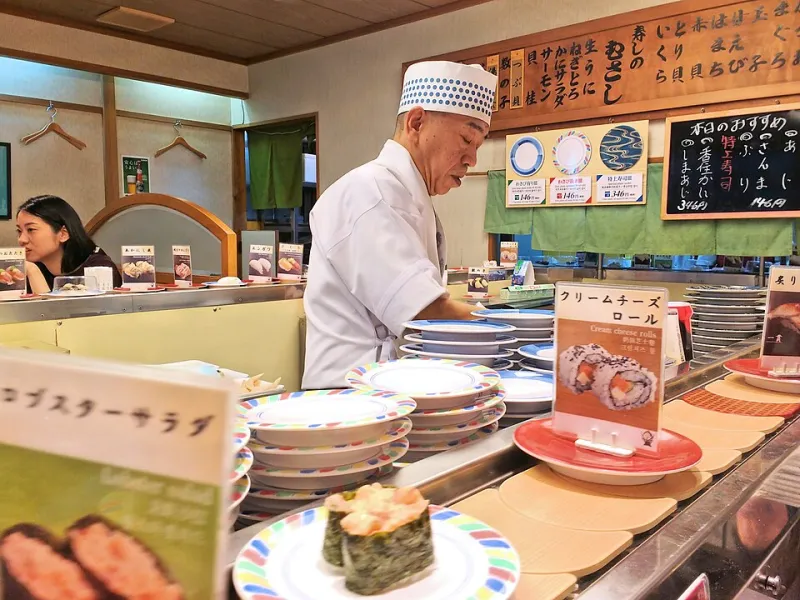
Photo: Marek Ślusarczyk (Tupungato) Photo portfolio, CC BY 3.0, via Wikimedia Commons
Walk into any serious sushi counter in New York City and you will likely witness a chef's knife moving with breathtaking speed and economy. The clean draw of a yanagiba through a lobe of bluefin, the whisper-thin slicing of flounder for a hirame nigiri — it is, by any measure, a compelling spectacle. But the moment you reduce great sushi to mere knife technique, says a growing chorus of the city's most respected itamae, you have already missed the point entirely.
"Guests come in and they watch the knife," says one veteran chef who has operated an omakase counter in Manhattan for over a decade. "They film it. They post it. And I understand — it is beautiful to watch. But the knife is only the final sentence of a very long story."
That story, it turns out, is far more complex, intuitive, and even emotional than most diners ever consider.
The Precision Myth
The popular image of sushi craftsmanship — propagated by cooking competitions, social media reels, and a culture that prizes visible technical skill — positions the knife as the primary instrument of quality. Under this logic, the most precisely cut fish produces the finest sushi. Uniform slices, clean angles, consistent thickness: these are the metrics by which many casual observers judge an itamae's ability.
Chefs across New York's sushi landscape are pushing back against this reductive view, and with considerable force.
"Precision is a baseline," explains a chef whose small counter in the West Village has earned consistent praise from serious food writers. "Every trained sushi chef can make consistent cuts. That is not what separates a transcendent piece from a technically acceptable one. What separates them is everything that happened before the knife touched the fish."
That "everything" encompasses decisions that are rarely visible to the diner: how long a fish has been aging, at what temperature it was stored, whether the grain of a particular tuna loin demands a slight adjustment in angle, and — perhaps most critically — whether the chef's intuition about that specific fish on that specific evening is guiding the blade toward something extraordinary.
Reading the Fish
Seasoned itamae in New York frequently describe their relationship with raw fish in almost conversational terms. They speak of "listening" to a piece of salmon belly, of recognizing when a piece of amberjack is "ready" in a way that resists precise quantification. This is not mysticism. It is the accumulated sensory intelligence that comes from years — often a decade or more — of handling fish daily.
"Every fish is different, even from the same supplier, even from the same species," notes a chef who trained extensively in Japan before bringing his practice to a counter in Midtown. "The fat content changes with the season. The texture changes with how the fish was handled at sea. A great chef adjusts constantly. A technician just cuts."
This distinction — between the technician and the artist — is one that New York's sushi community raises with notable frequency. And it points toward a dimension of sushi-making that no amount of knife sharpening can manufacture: genuine creative judgment.
The Invisible Decisions
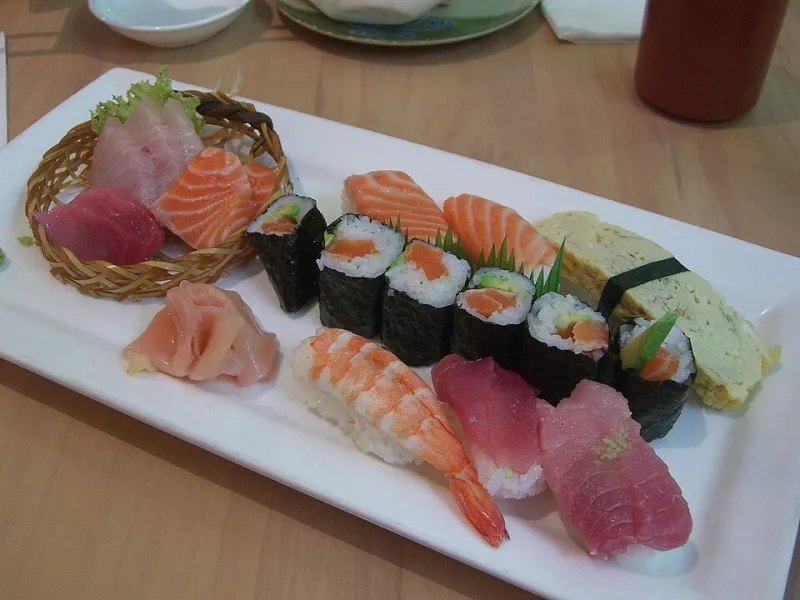
Consider a single piece of otoro nigiri. The diner sees a glistening rectangle of fatty tuna resting on a compact mound of seasoned rice. What they do not see is the sequence of decisions that produced it.
How was the cut oriented relative to the muscle grain? Was the slice pulled at a slight angle to maximize the sensation of the fat melting across the palate? How warm are the chef's hands, and has he compensated for that warmth when forming the rice? How much wasabi was applied, and was it placed to bloom gradually rather than assault immediately? How firmly was the nigiri pressed — firm enough to hold its shape, gentle enough to allow the rice to breathe and release on the tongue?
Each of these variables is a creative decision, not a technical one. And they are made, in most cases, in under thirty seconds, guided not by a formula but by the chef's reading of the ingredients in front of him.
"The knife is maybe ten percent of what I do," says one chef who regularly fields questions from guests about his equipment. "The other ninety percent is judgment. And judgment cannot be filmed."
What Diners Can Actually Appreciate
For guests dining at New York's sushi counters, this perspective invites a more expansive kind of attention. Rather than watching only the knife, consider the pace at which a chef works — not rushed, not performative, but calibrated to the specific demands of each piece. Notice whether the chef pauses, even briefly, before making a cut. That pause is often the moment of genuine artistry: the itamae assessing, adjusting, committing.
Pay attention, too, to the temperature of the nigiri as it arrives. A chef who has mastered the balance between rice warmth and fish temperature is demonstrating a form of precision that no camera can capture. The piece should feel alive in the hand — cohesive but not compressed, cool on top and subtly warm beneath.
"I always tell guests: close your eyes for one piece," says a chef whose Lower East Side counter has become something of a destination for serious sushi enthusiasts. "Just eat it. Don't watch it being made. Don't photograph it. Just experience what arrives. That is when you start to understand what we are actually doing."
Technique in Service of Something Greater
None of this is to suggest that knife skill is unimportant. Every itamae interviewed for this piece trained rigorously in the fundamentals, spending years on tasks far more repetitive than slicing fish before earning the right to work at a counter. Technical mastery is the necessary foundation. But it is precisely that — a foundation, not the structure itself.
The sushi experience that New York's finest counters aspire to deliver is one in which the diner feels, however briefly, the presence of another person's full attention and accumulated wisdom. That is not something a blade produces. It is something a human being — one who has learned to trust intuition as much as technique — brings to the counter each evening.
The knife, in the end, is simply the final translator of a conversation that began long before the fish arrived at the restaurant. Learning to appreciate that conversation is, perhaps, the most rewarding dining education New York has to offer.