Counting Courses, Missing the Point: The Quiet Crisis of Quantity Over Craft at NYC's Omakase Tables
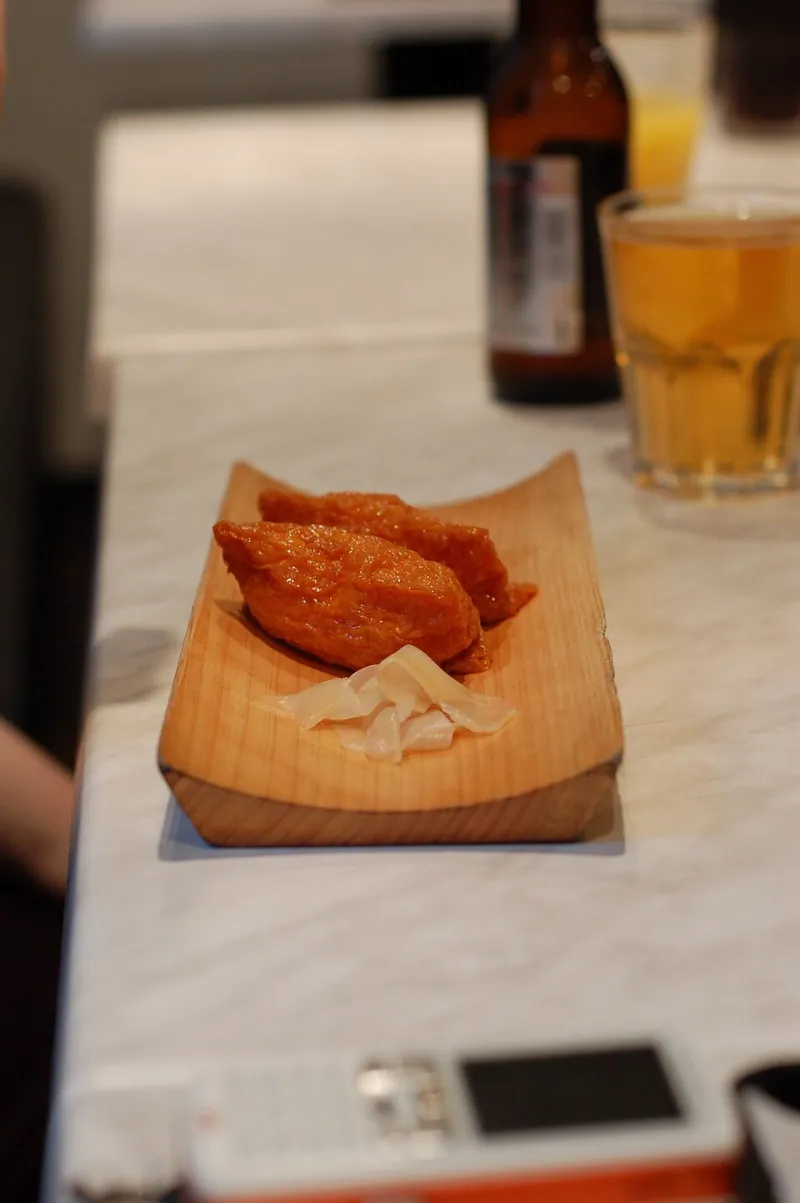
Photo: Hachimaki from Japanese noodle & sushi bar Ryo [1], 84 Brewer Street, London, CC BY-SA 2.0, via Wikimedia Commons
There is a particular kind of satisfaction that arrives with a lengthy tasting menu. The courses accumulate. The evening stretches. The bill, when it finally appears, confirms that something significant has transpired. Yet in New York City's increasingly crowded omakase landscape, that sensation of significance is not always earned. Somewhere between the eighth and eighteenth piece of nigiri, a critical question tends to go unasked: is this meal genuinely extraordinary, or has it simply been made to feel that way through sheer volume?
The answer, for many seasoned diners, is more complicated than any restaurant would prefer to acknowledge.
The Arithmetic of Prestige
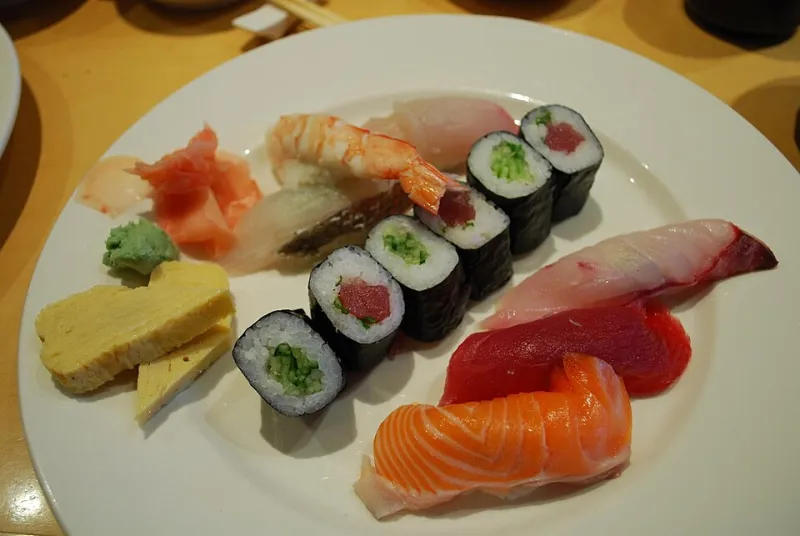
Over the past several years, the standard omakase format in New York has undergone a quiet but consequential transformation. What was once a disciplined, chef-driven ritual — typically anchored by twelve to eighteen pieces of meticulously prepared nigiri — has expanded in many establishments into sprawling affairs featuring upwards of twenty-five courses, elaborate appetizer sequences, interstitial palate cleansers, and supplemental add-ons that can push the final cost well beyond four hundred dollars per person.
The logic, from a business standpoint, is not difficult to follow. More courses signal greater effort. Greater effort justifies higher prices. Higher prices, in the current cultural moment, function as their own form of quality assurance. When a reservation costs as much as a transatlantic flight, diners arrive prepared to be impressed — and that psychological preparation does a considerable amount of the restaurant's work for it.
But craftsmanship does not scale with arithmetic. A chef who prepares fourteen extraordinary pieces of nigiri has not produced a lesser meal than one who sends out twenty-two adequate ones. The inverse, in fact, is far more likely to be true.
What Inflation Actually Costs
The practical consequences of course inflation are rarely discussed openly, but they are felt at the counter nonetheless. Extended menus demand extended service windows, which introduce fatigue — both for the kitchen and for the guest. Fish that might have been served at its precise optimal temperature during a tighter sequence arrives slightly compromised after a lengthy appetizer progression. Rice, which requires extraordinary attention and deteriorates quickly once formed, loses its ideal texture when a chef is simultaneously managing a dozen components across multiple simultaneous courses.
There is also the matter of focus. A sushi master working within a concentrated, well-edited format can bring complete attention to each piece. The same chef navigating a sprawling menu of supplemental courses, theatrical presentations, and interlude dishes is, by necessity, divided. The counter experience — that rare, intimate dialogue between chef and guest — becomes diluted when the kitchen is performing rather than simply, and profoundly, cooking.
Experienced Japanese dining purists have long understood this. The term shokunin — roughly translated as artisan or craftsperson — carries within it an implicit philosophy of restraint. Mastery, in the Japanese culinary tradition, is demonstrated not through accumulation but through the refinement of essentials. A single piece of bluefin, cut with precision and seasoned with quiet confidence, reveals more about a chef's ability than ten decorative amuse-bouches assembled from imported ingredients.
The Psychology Behind the Count
Understanding why diners so readily accept — and often actively seek — inflated course counts requires a brief examination of how Americans have historically evaluated fine dining. In a culture that has long associated portion size and abundance with value, the transition to omakase dining asks guests to fundamentally reorient their instincts. Many make that transition only partially.
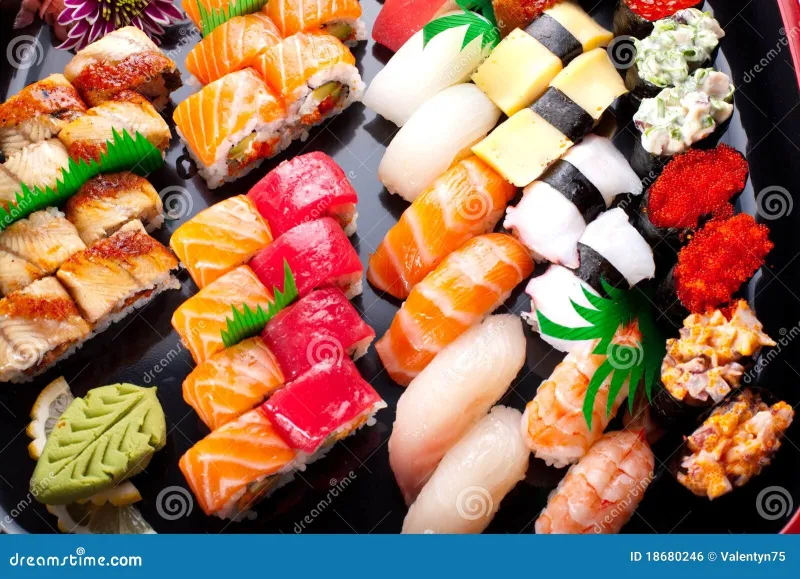
Restaurants operating in this environment are acutely aware of the dynamic. A twenty-two-course menu photographs more impressively than a fourteen-course one. It generates more social media content, more conversational material, more perceived return on a substantial financial investment. The experience becomes, in part, a performance designed to satisfy an audience — including, crucially, the diner's own need to feel that an expensive evening was commensurate with its cost.
This is not a cynical observation so much as an honest one. The pressure to justify premium pricing is real, and restaurants respond to market incentives. The problem arises when those incentives begin to override culinary judgment.
What to Actually Look For
For diners committed to evaluating omakase experiences on their actual merits, a few practical considerations prove useful.
Rice quality and temperature remain the most reliable indicators of kitchen discipline. Shari prepared with care and served at the correct temperature — slightly above body heat, never refrigerator-cold — reflects a chef who understands that the foundation of nigiri is as important as what rests upon it. No amount of premium fish can compensate for mediocre rice.
Seasonal coherence matters more than ingredient prestige. A menu that genuinely reflects the current moment — drawing on what is available at peak quality rather than what is most recognizable or most expensive — demonstrates culinary intelligence. Wagyu intermezzo courses and truffle-garnished preparations may impress on paper, but they often signal a kitchen more interested in perceived luxury than in the subtler pleasures of Japanese seasonal cooking.
Pacing and restraint are virtues worth noticing. A chef who knows when to stop — who ends the meal at the moment of ideal satisfaction rather than pushing guests through additional courses to justify a price point — is demonstrating genuine confidence. Restraint in this context is not austerity; it is mastery.
The chef's presence and attention at the counter should feel focused, not harried. When a kitchen is operating within a format it has genuinely mastered, the service carries a quality of calm. Rushed transitions, inconsistent seasoning between courses, or a sense that the meal is being executed rather than crafted are worth noting.
A More Demanding Standard
None of this is to suggest that longer menus are inherently inferior or that higher prices are always unjustified. There are establishments in New York where an extended omakase represents a genuine, considered artistic statement — where each additional course earns its place through purpose and precision. Those meals exist, and they are worth seeking.
The more useful habit, however, is to resist the reflexive equation of length with quality. The omakase format, at its finest, is an act of trust: the guest surrenders the menu, and the chef takes responsibility for the experience. That responsibility is honored not by abundance but by intention. Every piece placed before a guest should reflect a decision — about the fish, the season, the moment, the individual sitting at the counter.
When that intention is present, twelve pieces of nigiri can constitute one of the most profound meals available anywhere in New York City. When it is absent, twenty-five courses leave the table feeling, quietly and inexplicably, empty.
The most important question a diner can bring to the counter is not how many courses are included in the price. It is whether the chef, in each individual moment of the meal, is fully there.