Locked Out of the Counter: How NYC's Sushi Booking Crisis Reveals a Deeper Shift in Dining Culture
Photo: Kilburn, B. W. (Benjamin West), 1827-1909 -- Photographer, Public domain, via Wikimedia Commons
There was a time, not so long ago, when reserving a seat at a respected sushi counter in New York City required little more than a phone call placed a few weeks in advance, a degree of courtesy, and genuine appetite. That era has effectively closed. Today, the act of securing a single omakase reservation at one of the city's most acclaimed establishments can demand the strategic patience of a seasoned investor—alerts set on booking platforms, refresh cycles measured in seconds, and, increasingly, membership fees paid simply for the privilege of trying.
The question worth asking is not merely how this happened, but what it tells us about the evolving relationship between New York diners and the Japanese culinary traditions they claim to revere.
The Mechanics of Scarcity
The structural reality of high-end omakase dining has always carried an inherent constraint. A counter seating eight to twelve guests, served by a single chef over the course of two to three hours, is not a format designed for volume. This intimacy is, in many respects, the point. The chef-to-guest ratio that defines the omakase experience—eye contact, conversation, the unhurried presentation of each piece—is incompatible with the kind of throughput that sustains a conventional restaurant.
Yet the present difficulty in obtaining reservations extends well beyond the honest arithmetic of limited seating. Several forces have converged to manufacture a scarcity that feels, at times, less organic than engineered.
Third-party reservation platforms, while genuinely useful in democratizing access to information, have introduced a secondary market dynamic that many diners find troubling. Seats at coveted counters are occasionally listed—sometimes by bots, sometimes by individuals—at significant markups on resale forums, effectively transforming a dining reservation into a tradable commodity. The restaurants themselves are often powerless to prevent it, and some have responded by moving to direct-only booking systems that favor those already embedded in certain social networks.
The Membership Model and Its Discontents
A growing number of New York's most sought-after sushi destinations have adopted membership or priority-access structures that grant early reservation windows to paying subscribers. The rationale is understandable: chefs and restaurateurs have watched their carefully cultivated tables fill with no-show guests who secured seats speculatively, treating a reservation as a low-stakes gamble rather than a genuine commitment.
The membership model, in theory, filters for sincerity. Those willing to pay an annual fee for early access are presumably more invested in actually attending.
In practice, however, the arrangement raises legitimate concerns about equity. When the first barrier to entry is financial—before a single piece of fish has been served—the counter stops functioning as a place where passion and knowledge earn their place. It becomes, instead, a venue stratified by disposable income. The devoted enthusiast who has spent years studying Japanese cuisine, who understands the difference between kohada and gizzard shad at a granular level, may find themselves perpetually behind the guest who simply has the means to pay for priority.
This is not a criticism unique to sushi. Exclusivity has long been a feature of fine dining broadly. But it carries a particular tension within Japanese culinary philosophy, where the relationship between chef and guest has traditionally been grounded in mutual respect and shared attention—not market positioning.
Social Media and the Hype Economy
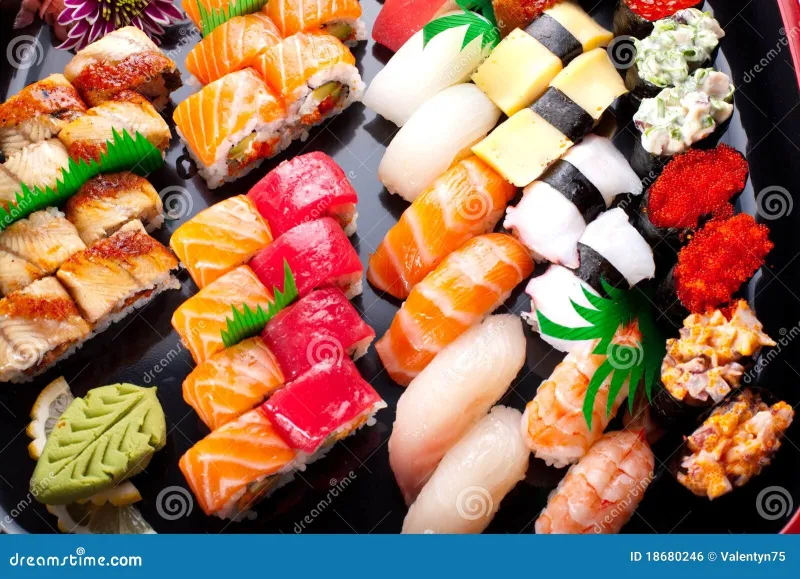
No examination of the current booking crisis would be complete without acknowledging the role of social media in reshaping demand. A single well-circulated post—a gleaming tray of nigiri photographed under flattering light, a chef's precise hand movements captured in slow motion—can redirect the attention of tens of thousands of potential diners toward a restaurant that, structurally, can accommodate perhaps forty guests per evening.
The implications are significant. Restaurants that cultivate a visible social presence, or that attract the attention of influential accounts, find their reservation queues extending from weeks to months almost overnight. This visibility is not inherently problematic; there is something genuinely democratic about a wider audience discovering exceptional Japanese cuisine in New York. But when the primary driver of demand is aesthetic virality rather than culinary substance, the risk is that prestige becomes decoupled from merit.
Chefs who have spent decades mastering their craft—studying in Japan, building relationships with suppliers, developing the kind of intuitive seasonal intelligence that defines true omakase—can find themselves eclipsed in the booking algorithm by newer establishments whose primary advantage is a more photogenic presentation.
What Authentic Japanese Dining Tradition Asks of Us
It is worth pausing to consider what the Japanese culinary tradition at the heart of this conversation actually values. The shokunin philosophy—the dedication of a craftsperson to continuous refinement—is not concerned with scarcity as a marketing tool. The great sushi masters of Tokyo's most revered establishments have not historically cultivated mystique through manufactured inaccessibility. Their reputations were built through decades of consistent excellence, through relationships with regular guests who returned not because they had secured a status symbol, but because they found something genuinely nourishing at the counter.
New York's finest sushi restaurants, at their best, have aspired to that same standard. The challenge now is to preserve that aspiration in an environment that increasingly rewards the appearance of exclusivity over its substance.
Navigating the Landscape as a Thoughtful Diner
For those genuinely committed to experiencing exceptional Japanese cuisine in New York—rather than simply collecting the credential of having done so—a few principles are worth holding.
First, broaden the aperture. The restaurants generating the most social media attention are not always the ones offering the most authentic or technically accomplished experiences. Some of the city's most skilled sushi chefs work in quieter contexts, with shorter waitlists and deeper investments in the traditions they practice. Seek those out.
Second, treat the reservation as a commitment rather than an option. The no-show culture that has driven many restaurants toward restrictive booking policies is a collective problem with individual solutions. Cancel promptly when plans change. Honor your booking as you would any other serious appointment.
Third, engage with the experience on its own terms rather than through the lens of documentation or social currency. The counter rewards presence. A diner who arrives genuinely curious—about the fish, the rice, the chef's choices that evening—will leave with something that no photograph can fully convey.
A Moment of Reckoning
The reservation paradox at the heart of New York's sushi scene is, ultimately, a reflection of broader cultural tensions: between access and exclusivity, between authenticity and performance, between the genuine desire to experience something meaningful and the equally human desire to be seen doing so.
The counters themselves cannot resolve those tensions on behalf of their guests. What they can do—and what the best among them continue to do—is hold the standard of the craft regardless of who is seated before them. The chef's obligation to the fish, to the rice, to the traditions passed down through years of disciplined study, does not waver based on how the reservation was obtained.
For diners willing to meet that standard with equivalent seriousness, a seat at a great New York sushi counter remains one of the most genuinely rewarding meals the city offers. The path to that seat has grown more complicated. The experience, when it is everything it should be, remains worth the effort.