The Silent Lesson at the Counter: What a Sushi Chef's Blade Can Teach You
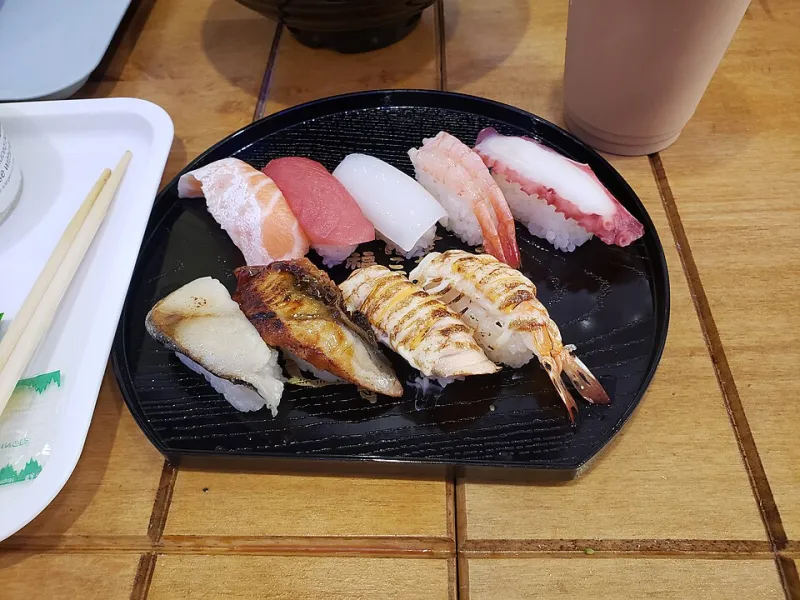
Photo: Andy Li, CC0, via Wikimedia Commons
There is a particular quality of silence that settles over an omakase counter in the moments before a chef makes the first cut of the evening. The conversation lowers almost involuntarily. Guests lean, almost imperceptibly, forward. What follows—the clean, unhurried draw of a yanagiba through a lobe of aged tuna—is, on one level, the beginning of dinner. On another, it is the opening movement of a lesson most diners never realize they are receiving.
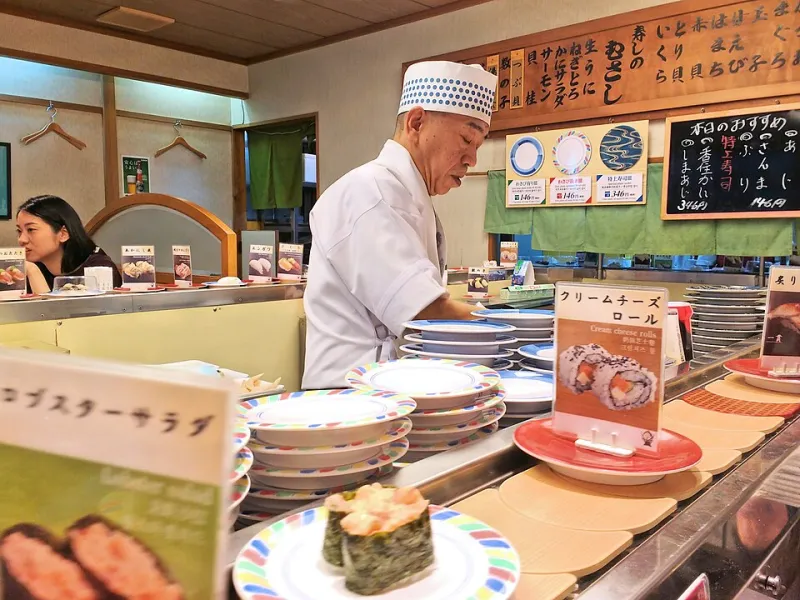
New York City's finest sushi restaurants have long been celebrated for their fish sourcing, their rice technique, and the extraordinary depth of experience their chefs bring to the counter. Less frequently discussed is the degree to which a skilled itamae functions as an educator simply by working in plain view. The open counter format, a defining feature of serious omakase dining, places every gesture within arm's reach of the guest. For those who know what to observe, the education is remarkable.
The Knife as a Philosophical Object
Before examining specific techniques, it is worth understanding how Japanese culinary culture regards the knife itself. Unlike the Western chef's knife—a versatile, rocking instrument built for efficiency—traditional Japanese blades are purpose-built, single-beveled tools designed for a precise category of tasks. The yanagiba, long and narrow, is engineered exclusively for slicing raw fish in a single, pulling motion. The deba, heavier and broader, is built to break down whole fish with authority. The usuba is reserved for vegetable work of extraordinary finesse.
Chefs at restaurants such as Sushi Noz, Shoji at 69 Leonard, and Sushi Sho—each a benchmark of the New York omakase scene—maintain their blades with the same devotion a musician applies to an instrument. Watching a chef hone a yanagiba before service, drawing it across a whetstone with measured, deliberate strokes, communicates something essential: that precision is not achieved in the moment of cutting. It is built through preparation.
Reading the Angle: What the Deba Reveals
For diners positioned at the counter during a whole-fish breakdown, the deba knife offers one of the most instructive displays in Japanese cooking. The angle at which the blade meets the fish—typically between fifteen and thirty degrees depending on the species and the desired yield—is not arbitrary. It is the result of years of repetition calibrated to the specific anatomy of each fish.
Chef Masa Ito of Sushi Amane has spoken publicly about the relationship between knife angle and respect for the ingredient. "When you cut at the wrong angle, you leave meat on the bone," he has noted. "That is waste. It is also a failure of attention." From the counter, a guest watching a skilled chef fillet a Japanese sea bream can observe this principle in real time: the blade follows the spine with almost no visible pressure, guided more by geometry than by force. It is a physical argument for the idea that power and aggression have no place in refined cooking.
For the home cook in the audience, this observation carries practical weight. The instinct, when breaking down a whole fish at home, is often to press harder when resistance is encountered. The counter lesson is the opposite: resistance is almost always a signal to reassess the angle, not to increase force.
The Pull Cut and the Myth of Speed
Perhaps the most visually arresting technique visible from the omakase counter is the single-stroke pull cut used to portion nigiri. The yanagiba enters the fish at the far edge and travels the full length of the blade in one uninterrupted motion, producing a slice of uniform thickness without any of the sawing or repositioning common in less disciplined kitchens.
What strikes most first-time omakase guests is not the speed of this motion—it is, in fact, quite unhurried—but its completeness. There is no correction mid-stroke, no second pass to even an imperfect edge. This is by design. Multiple cuts through the same piece of fish damage the cellular structure of the flesh, compromising texture and, according to many Japanese chefs, flavor. The single-stroke method is not a performance. It is a technical requirement.
Chef Toshio Oguma, whose counter work in Midtown Manhattan has earned consistent critical recognition, has described the pull cut as "a test of commitment." Once the blade begins its path, the chef cannot reconsider. "If you are not sure," he explained during a rare public demonstration, "the fish knows before you do." It is a statement that sounds almost poetic until you understand its literal dimension: hesitation produces visible irregularities in the cut surface that affect how the fish receives soy sauce and how it sits against the rice.
Garnish Work and the Discipline of Restraint
Beyond fish preparation, the counter also offers an education in the knife work applied to garnishes—the thin-cut shiso, the precisely julienned daikon, the paper-thin cucumber that accompanies certain courses. These elements are rarely the focus of a diner's attention, but they are among the most technically demanding tasks performed in view.
The katsuramuki technique, in which a long, continuous sheet is peeled from a cylindrical vegetable using a usuba knife, is a foundational exercise in Japanese culinary training that can take years to master. When a chef performs even a simplified version of this at the counter, producing garnish material of consistent, translucent thinness, the diner is witnessing the output of a discipline that most Western culinary programs do not teach at all.
What these garnish preparations communicate philosophically is equally significant: that no element of a dish, however minor its apparent role, is exempt from the standard of precision applied to the primary ingredient. The shiso leaf cut to accompany a piece of kohada is not an afterthought. It is held to the same standard as the kohada itself.
Do Chefs Teach Intentionally?
The question of whether New York's itamae consciously use the counter as a teaching space yields nuanced answers. Several chefs, when asked directly, resist the framing of deliberate instruction. "I am not thinking about teaching," one Michelin-recognized chef explained. "I am thinking about the fish, the rice, the guest's next course. If someone learns something by watching, that is natural. It is not a class."
And yet the open counter was always, in part, a communicative format. The tradition of omakase dining places the chef and guest in a relationship of trust and observation. The chef's movements are not hidden. They are, in a meaningful sense, offered. Whether a guest receives them as entertainment, as education, or simply as the backdrop to a fine meal is a matter of their own attention.
What is clear, after an evening spent watching closely at any of New York's serious sushi counters, is that the knifework on display represents a coherent body of knowledge—one with direct applications for anyone who cooks at home, studies Japanese culture, or simply wishes to understand why a piece of fish cut by a master tastes different from one cut by a novice.
How to Watch More Effectively
For diners who wish to engage more deliberately with this dimension of the omakase experience, a few practical suggestions. Arrive early and observe the mise en place: the way tools are arranged, cleaned, and maintained before service begins tells you a great deal about the chef's standards. During service, watch the non-dominant hand as closely as the knife hand—the guiding fingers of a skilled itamae curl inward in a consistent claw grip that protects against injury while controlling the cut. And when a particularly complex preparation appears before you, do not hesitate to ask a quiet, respectful question. Most chefs, when approached with genuine curiosity rather than distraction, are willing to offer a brief explanation.
The counter at a New York omakase restaurant is one of the most concentrated environments for culinary observation available anywhere in the United States. The fish is exceptional. The rice is the product of deep expertise. And the knifework, if you are paying attention, is a graduate-level education served one course at a time.