Failure Is the First Ingredient: How New York's Sushi Masters Use Discomfort as a Teaching Tool
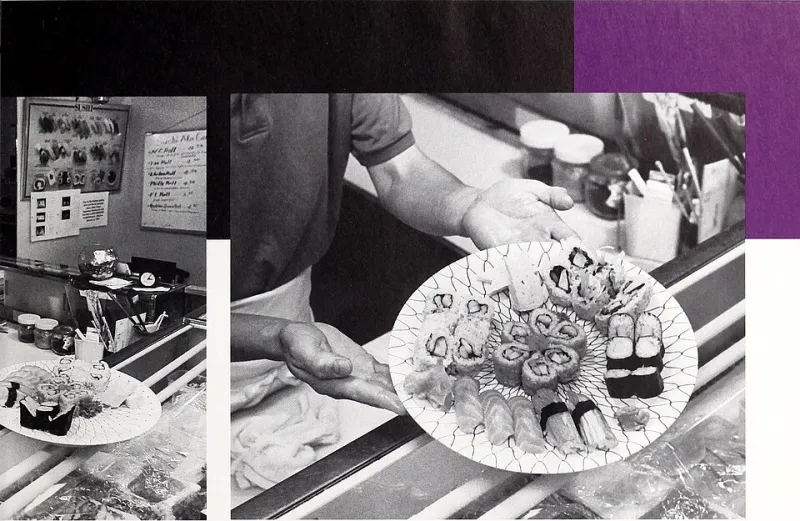
Photo: UNC Sea Grant College Program, No restrictions, via Wikimedia Commons
There is a reason the word dojo does not translate simply as "room" or "restaurant." In Japanese martial tradition, the dojo is a hall of the way — a space where one submits to a discipline not to perform competence, but to surrender it. The student enters knowing less than the teacher. That asymmetry is not a source of shame. It is the entire point.
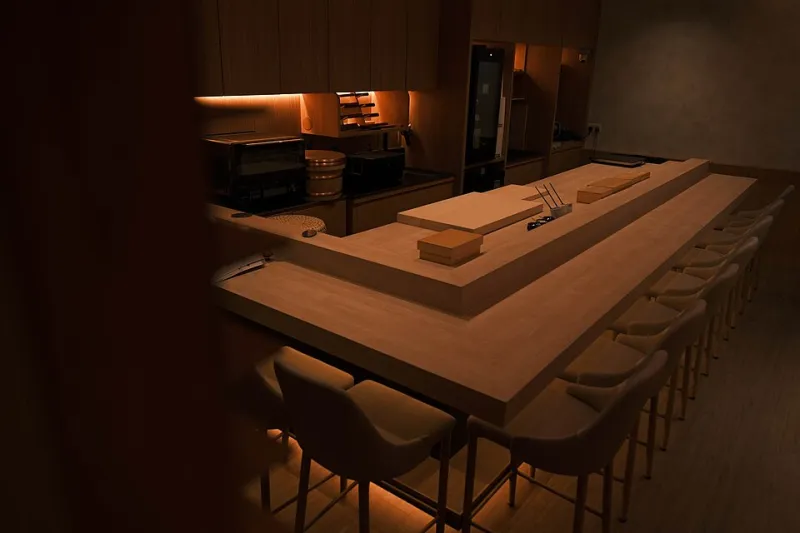
New York's most serious sushi counters have quietly adopted this same logic. Not as branding, and not as theater, but as a genuine pedagogical framework. The chefs who operate these spaces have come to understand something that runs counter to conventional hospitality wisdom: that protecting a guest from discomfort is not the same as serving them well.
What the Martial Arts Tradition Actually Teaches Us
In a traditional dojo, the instructor does not shield the student from difficult technique. The student is asked to attempt something beyond their current ability, to fail in front of others, and to return the next day. Repetition and humility are not obstacles to mastery — they are the method.
Apply that framework to an omakase counter, and something interesting emerges. The guest who arrives at a twelve-seat sushi bar in Manhattan has, in most cases, already paid a significant sum. They have dressed appropriately, read the reviews, perhaps even studied the seasonal menu in advance. They arrive, in other words, armored. And yet the chefs who run the rooms New Yorkers speak about most reverently — the ones where a single meal reshapes how a person thinks about food — are the ones who gently, deliberately, remove that armor.
They do this not through confrontation, but through exposure. A piece of aged fish presented without explanation. A temperature that surprises. A texture the guest did not expect and cannot immediately categorize. These are not accidents. They are invitations.
The Controlled Moment of Uncertainty
Several prominent sushi chefs operating in New York have spoken, in various contexts, about the value of what might be called the "pause moment" — the brief silence that follows a piece of nigiri that has genuinely surprised a guest. It is in that pause, they argue, that real dining begins.
The transactional model of high-end dining rushes past that pause. It fills the silence with explanation, reassurance, or the arrival of the next course. The dojo model lingers there. It allows the guest to sit with uncertainty, to reach for their own language before the chef offers his.
This is not indifference. It is a form of respect — the same respect a skilled instructor shows a student by not answering a question before the student has genuinely wrestled with it. The chef who waits for the guest to speak first is not withholding. He is listening for where the guest actually is, rather than where the guest imagines themselves to be.
When Mistakes Become the Lesson
Perhaps the most radical expression of the dojo philosophy at the sushi counter is the willingness to acknowledge error — and to do so openly, in the moment, rather than quietly correcting course and hoping no one noticed.
In traditional hospitality, mistakes are managed. A dish that arrives at the wrong temperature is replaced without comment. A misread dietary restriction is handled discreetly. The guest is never made to feel the machinery of the kitchen. The illusion of seamlessness is preserved at all costs.
At a handful of New York's most thoughtfully run sushi counters, this calculus has been deliberately reversed. When something does not go as intended — a cut that does not achieve the precise texture the chef sought, a rice temperature that has shifted slightly in the time it took to plate — the chef says so. Briefly, without drama, and with a clarity that reframes the moment entirely.
What might have registered as a flaw becomes, instead, a demonstration of the standards being applied. The guest understands, suddenly, that they are sitting across from someone who holds themselves to a measure of precision that most people will never encounter. The imperfection does not diminish the experience. It illuminates the craft.
Resilience as a Dining Skill
For the New York diner accustomed to the performance of luxury, this can initially feel disorienting. The omakase format already demands a degree of surrender — the guest does not choose; they receive. But the dojo model asks for something more. It asks the guest to remain present through discomfort, to resist the impulse to categorize an unfamiliar flavor as either good or bad before they have fully experienced it.
This is, in a very real sense, a form of resilience training. Not the resilience of endurance, but the resilience of openness — the capacity to stay curious when the instinct is to retreat into the familiar. Guests who return to these counters repeatedly tend to describe a shift in how they experience not just sushi, but dining more broadly. They become more attentive. More willing to sit with uncertainty. Less dependent on the validation of a recognizable flavor.
That transformation does not happen because the meal was perfect. It happens because the meal was honest.
What New York's Dining Culture Stands to Gain
New York is not a city that traditionally rewards vulnerability. Its dining culture, like its broader culture, prizes confidence, access, and the appearance of knowing. To sit at an elite counter and admit that you do not understand what you are tasting — that you are, in the language of the dojo, a white belt — runs against deeply ingrained instincts.
And yet the chefs who have built the most loyal, most engaged communities around their counters are the ones who have made that admission not just acceptable, but essential. They have created spaces where not knowing is the beginning of something rather than the end.
The dojo, in martial tradition, is not a place you visit once to demonstrate what you have already learned. It is a place you return to, again and again, because the learning is never finished. The most compelling sushi counters in New York City operate on exactly this principle. They are not destinations. They are practices.
And like any practice worth keeping, they ask something of you — not perfection, but presence. Not mastery, but the willingness to fail well.
That, in the end, may be the most authentically Japanese gift New York's sushi masters have to offer.