What the Knife Doesn't Tell You: The Hidden Forces Behind Truly Great Sushi
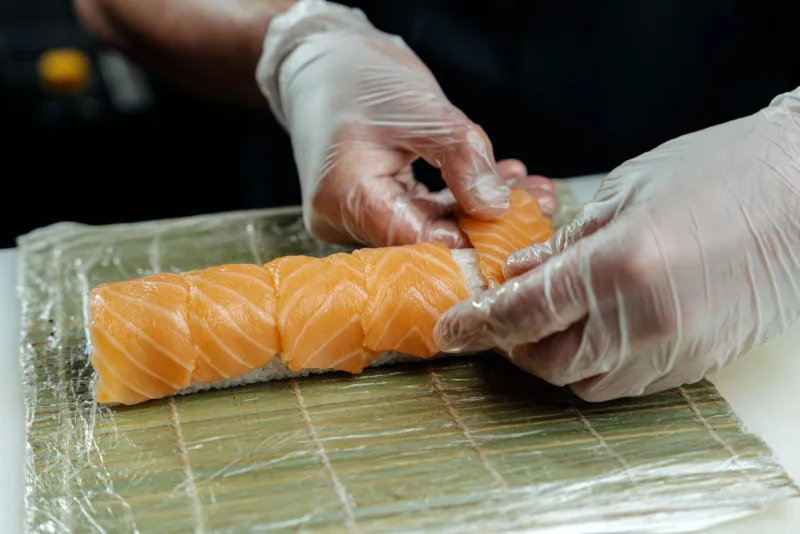
There is a particular moment that plays out in sushi restaurants across New York City with reliable frequency. A guest leans forward, eyes fixed on the chef's hands as the yanagiba glides through a lobe of tuna. A quiet gasp, perhaps. A murmured comment to a dining companion. The knife, it seems, has become sushi's most cinematic element — and in that spectacle, a significant misunderstanding has taken root.
Ask the chefs themselves, and many will tell you, with measured patience, that blade technique — while necessary — is among the least decisive factors separating forgettable sushi from something genuinely transcendent.
The Seduction of Visible Skill
It is not difficult to understand why Western audiences became so captivated by the cutting. In a culture that prizes visible demonstrations of expertise, the yanagiba offers exactly that: a tangible, photogenic display of craft. Documentaries dwell on it. Social media amplifies it. Culinary tourism has been built around it.
But several veteran itamae working at respected counters throughout Manhattan and Brooklyn describe this fixation as a kind of category error — confusing the most visible component of the work with the most important one.
"Knife skill is the vocabulary," one chef with more than two decades of experience explained during a conversation at his Lower East Side counter. "But knowing vocabulary does not make you a writer. What you do with it — the choices, the timing, the reading of each fish on a given day — that is where the real work happens."
This is not a dismissal of technical proficiency. Every chef consulted for this piece spent years, often more than a decade, developing precision with their blades before earning the right to work independently. The point, rather, is one of proportion: technical correctness is the floor, not the ceiling.
Intuition as the Primary Instrument
If not the knife, then what? The answer that emerges consistently from conversations with New York's sushi professionals is something harder to photograph and considerably harder to teach: intuition built through accumulated sensory experience.
A chef working at a celebrated omakase counter in Midtown described spending his early apprenticeship years doing almost nothing but touching fish. Not cutting it. Not plating it. Simply pressing, turning, smelling, and observing how different species from different waters behaved under different conditions. "My hands learned things my brain hadn't processed yet," he said. "That knowledge — knowing when a piece of yellowtail has reached exactly the right moment to be served — that is not in any technique manual."
This sensory literacy extends far beyond seafood. The temperature and seasoning of shari — the vinegared rice — shifts subtly depending on the humidity of the room, the fat content of the fish it will support, and the pace at which a particular guest is eating. Adjustments happen in real time, often without conscious deliberation. Experienced chefs describe these micro-corrections as instinctive, developed through years of repetition until they become automatic.
No amount of knife practice produces this capacity. It accumulates differently, through a different kind of attention.
Ingredient Knowledge as a Competitive Differentiator
Another dimension that rarely enters the popular conversation about sushi mastery is the depth of knowledge required to source and evaluate raw ingredients at the highest level. In New York City, where top-tier restaurants compete for access to the same limited pools of exceptional fish — some imported directly from Japan, others sourced through relationships with domestic fishermen — the ability to assess quality before a single cut is made becomes paramount.
Several chefs noted that their most consequential decisions happen not at the counter but hours earlier, during procurement. Choosing between two pieces of hon maguro that look nearly identical to an untrained eye, or recognizing that a particular batch of uni has peaked and will begin to decline by the following evening — these judgments define what eventually reaches the guest's plate.
"People watch me slice," one chef remarked, with something approaching wry humor. "They should watch me at the fish market at four in the morning. That is where dinner is actually decided."
Timing and the Architecture of a Meal
There is a third force at work in exceptional sushi that receives even less attention than ingredient knowledge: the temporal architecture of an omakase progression. The sequence in which pieces are offered, the pacing between courses, the decision about when to introduce richness and when to offer relief — these are compositional choices that shape the entire dining experience.
A chef with experience at respected counters in both Tokyo and New York described this as "reading the table," a practice that involves monitoring not just what guests are eating but how they are eating it. Are they lingering? Rushing? Showing signs of palate fatigue? The menu, in the hands of a skilled itamae, is not a fixed document but a living one, adjusted in response to what the room requires.
This kind of dynamic calibration demands a form of emotional and perceptual intelligence that has nothing to do with blade angle or stroke length. It is, in a meaningful sense, a social art as much as a culinary one.
What This Means for the Diner
For guests at New York's sushi counters, this reframing carries practical implications. The chef who appears least theatrical — who works with quiet economy rather than dramatic flourish — may be the one exercising the most sophisticated judgment. The counter that feels unhurried and precisely paced may be delivering the most technically demanding experience, even if nothing about it announces itself as such.
Paying attention to what is not immediately visible — the quality of the rice, the temperature of each piece as it arrives, the subtle variations in texture across a progression — offers a richer way of engaging with the meal than focusing on the mechanics of the cut alone.
The knife, after all, is only ever as good as the mind directing it, the ingredients informing it, and the accumulated years of sensory experience that no YouTube tutorial can replicate.
At the counter, as in most disciplines worth pursuing seriously, the most important work tends to be the work you cannot see.